There are two nutritional camps I respect who disagree with each other. I see the value in each path and will try to reconcile the differences.
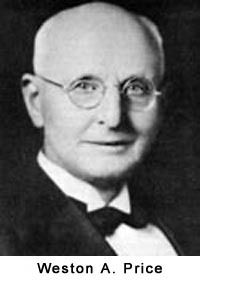
We all know what the vegans represent—no animal products. The vegans that I follow are the whole food plant-based ones that are nutrition first. Weston A. Price needs some explanation. Back in 2011, I covered his book in the post Nutrition and Physical Degeneration.
Nutrition and Physical Degeneration by Weston A. Price was published in 1939 and might be more relevant today than it was back then. The story of this book is fascinating. A dentist from Cleveland traveled the world to study what different cultures ate and how it impacted their health. Dr. Price did this at a time just before the world got completely connected. He was able to see how traditional people lived. He was also able to see and measure the health consequences of people who had just been exposed to modern food.
Then I posted Paleo vs Weston Price, which ended up being a super popular post in the nutritional blogosphere. I described how shortly after going Paleo I was more persuaded by the Weston Price principles.
Paleo diets are excellent at removing the neolithic poisons of processed foods, vegetable oils, and sugar. By resetting your diet to just before the agricultural age, you should see a marked improvement in health. However, I think we can learn a lot from traditional cultures that aren’t addressed with a strict paleo diet. Throwing out the knowledge gained between the end of the Paleolithic era and modernization is probably not a wise thing to do. Here are the areas of nutrition I feel the Weston A. Price (WAPF) (aka The Nourishing Traditions) group does a better job promoting than the paleo diet.
And from my post The Endgame for Paleo is WAPF.
As much as I like the Paleo diet as a starting point, I prefer a Weston A. Price approach to nutrition. Paleo is good at figuring out what foods to eat. Weston A Price focuses not only on food and food quality but also on food preparation. Paleo is about bringing the food back to the cave. Weston A. Price takes it from there and figures out how to extract the maximum nutrition from that food. Fermentation, soaking, sprouting, making stocks, and organ meats.
In the title of that post, I used the acronym WAPF, which is for the foundation that represents the principles of Weston A. Price. At the time of those posts, I wasn’t that aware of the positions of the group and lumped them together in my brain. For this post, I am not referring to the foundation, but our understanding of what Dr. Price witnessed when he traveled the world studying different cultures.
Price was able to show the harmful impact processed flour, refined sugar, and processed oils had on cultures that had never been exposed to those foods. His book is full of photographic dental evidence.
Price was also able to show how different cultures used whole foods local to their region to create vibrant health without knowing anything about nutritional science. Vitamins had only recently been discovered, yet these cultures knew how to prepare and combine foods in their environment to prevent deficiencies. They soaked, sprouted, and fermented their foods. They ate the entire animal nose to tail.
Weston Price in the Modern World
I was part of a Weston Price Meetup group for a few years here in Seattle. The group is not around anymore. Every month we would get together for a potluck and socialize. We shared our grass-fed meats, local cheeses, and ferments.
During this period, I learned a lot about food. If you dig through the archives of this site, you will see lots of posts on making traditional foods.
Yet if you looked at my diet today, it is much closer to vegan than Weston Price. I consume even less meat than when I put out my 2023 edition of What I Eat. Why?
Different Era, Different Goals, Different Strategies
Following the traditional diets that Price was exposed to was for a different era. It was for a world where calories were scarce and extracting as much nutrition as possible was essential for survival. The wisdom on how to do that was passed down from generation to generation.
Traditional cultures did not have refrigeration. To store calories in times of calorie scarcity, they banked calories with fermentation and animals. Veggies would rot, but the salt used to make sauerkraut and kimchi would preserve the food for months. Milk would spoil, but cheeses and other dairy ferments would be a store of calories for a much longer time window. The other store of calories would be from the animal meat itself.
Today we don’t have to bank calories based on the seasons. We can buy whatever we want from anywhere in the world 24/7/365. Nutritional deficiencies are mostly gone and we all get plenty (or too much) to eat these days. We no longer need calorie-dense dairy ferments or animal fat to survive or thrive.
We also live in a modern world full of environmental toxins. These toxins and microplastics did not exist in traditional cultures. Eating a small amount of animal fat in a clean world that is calorie-scarce would be healthier than consuming a lot of meat in a calorie-abundant polluted world.
A mostly vegan diet solves these issues. You can get nutrient-dense food with fewer calories and fewer toxins. I still use the soaking, sprouting, and fermentation knowledge that I gained more than a decade ago. However, I consume far less animal fat. My blood work looks great and I’m leaner too.
Last Words
To be clear, I don’t think following a traditional diet in modern times is a poor choice. For most people, it would be a great improvement over eating a diet of processed foods. I just no longer think it is optimal. Too many calories and too many environmental toxins, even if they are from nutrient-dense sources, are still going to be a problem.
If we ever had some disaster scenario where global shipping was shut down and we were forced to truly live locally and work for calories in a scarce environment, I’d return to a more Price approach.
Comments
exfatloss
March 17 at 2024 at 1:13 AM
I kinda disagree with you on the “density bad” point. While we might not need to store dense calories, I also don’t see how eating energy-poor/diluted foods is of any benefit. If anything, you’ll get more environmental toxins per calorie. I’ve also seen way more data that vegetables/plants are full of environmental toxins and pesticides than animal products. If anything, the animals seem to filter it out, especially ruminants.
Energy-dilute foods just mean you’re eating a ton of fiber and water. Maybe you like doing that, but I haven’t seen a convincing argument that it’s in any way beneficial.
I think you’re implying/assuming that energy dense foods will make you overeat and gain fat. This is not my experience at all; I’ve never lost as much fat as easily and sustainably, without impacting my metabolism, as on a cream diet. Energy dense per se doesn’t seem to make you overeat in absence of other factors.
One thing that I find interesting is that the vegans/WFPB are actually onto something that I’ve only been turned on to recently - protein restriction, or at least not mainlining infinite muscle meat protein.
Could the unifying factors be that WFPB is seed-oil free and pretty low protein? (Veganism itself doesn’t imply much, I think, you could be vegan and only consume soybean oil mixed with HFCS.)
A lot of people in r/saturatedfat read all the vegan/WFPB people (McDougall, Pritkin, and so on) and take away the good bits without the ideology.
Usually, these people will eat some small meat portions, lean unless ruminant meat (to minimize linoleic acid), and then eat lots of starches like potatoes, white rice, refined flour, and so on.
It seems to work great for them. For me, high animal fat (cream) and low meat is working.
Again, minimizing linoleic acid and eating very little protein.
MAS
March 17 at 2024 at 11:37 AM
@exfatloss - of course energy density is a problem. Maybe not for you, but it is obvious that people are getting heavier as foods become more calorie dense. That is what processed foods accomplish.
A Weston Price diet is not processed, but it is more calorie dense by design. For survival, calorie density is a good thing. In abundance, it is not. in a survival situation, I want a jar of peanut butter or cheese, not a bag of lentils.
As for plants and environmental toxins. What do you think the animals that we eat are eating? The same plants. When we eat their fat, we are eating a concentrated sources of those toxins.
It is possible that the toxins play a minor role in health outcomes. I don’t know. Others have raised the alarm that metabolic rates are failing and cancer rates are rising. I suspect they are related, so out of caution, I get more plant protein than I would if I had lived a 100+ years ago.
Potatoes are awesome. Not sure why you put them in the same sentence as refined flour. Weston Price raised the alarm on refined flours in his book and the whole-food plant-based vegans agree.
exfatloss
March 18 at 2024 at 4:44 PM
> of course energy density is a problem. Maybe not for you, but it is obvious that people are getting heavier as foods become more calorie dense. That is what processed foods accomplish.
I don’t think this is quite as obvious as you seem to think. People are also becoming more heavy as PUFAs increase and piracy goes down. Correlation is not causation.
In fact, energy density is mostly a function of water content. Is dehydration of our food supply really such a big factor in obesity? I doubt it.
> What do you think the animals that we eat are eating? The same plants.
Yes, but as I said in my comment, they seem to largely filter them out. That’s why in food tests, plant foods are typically way more contaminated with toxins than animal foods. You present your conclusions here as some kind of clear cut thing, but I just think they’re not.
> Potatoes are awesome. Not sure why you put them in the same sentence as refined flour.
Well, makes sense if you don’t believe “processed” or “refined” food is bad ;) Many people actually believe that we invented processing and refining for a reason; to make plants healthier by removing many of the toxins and make them more easily digestible.
If “energy dense” is not bad, then this is a good thing.
MAS
March 18 at 2024 at 4:54 PM
@exfatloss - Animals bioaccumulate fat-soluble toxins. That may or may not be a big problem. I don’t know. I’m being cautious and minimizing my consumption of animal fat. If I lived in a pre-industrial world, I wouldn’t be concerned.
PUFA in the form of seed oil is a calorie-dense processed food. We both avoid, but maybe for different reasons.
exfatloss
March 18 at 2024 at 7:24 PM
But if you measure the toxins in animal products, they’re much lower (especially per carolie!) than in most plant foods.
That’s why I’m being cautious and avoiding plant foods, sticking to carolie-dense animal foods, mostly fats.
See how this game goes? :)
Yea PUFA is calorie-dense processed food. But this sort of intentional smoke screen is throwing out 98% of other calorie-dense processed food unnecessarily, and thereby a terrible heuristic.
If I argued that you should avoid all plant foods because sugar and seed oils are plant based, would you say I’m a lying quack? Probably, and you should.
MAS
March 18 at 2024 at 7:40 PM
@exfatloss - I think we have a lot more to learn here still. In the meantime, I’m more concerned about fat soluble toxins than water soluble toxins.
I wish you luck. I don’t expect we will know the answer to this question for many years.
tml_mpls
March 20 at 2024 at 9:03 PM
Nice post. I can relate. I really really (really) wanted my nutrition and weight loss answer to be eating some form of traditional diet inspired by WAPF and for me it just isn’t.
Leaving that aside, I still often think about how great it would be if there was a new Weston A Price inspired org that worked from first principles. Maybe even jettison the health claims completely but very clearly explain what an ancestral population ate plus give practical advice on how to re-create it in the modern world.
One final thought, genealogy is a hobby of mine, and I can attest that a lot of my ancestors in Smaland (southern Sweden) were living for a surprisingly long time back in 1700s. I suspect that diet was part of it, but physical activity and scarce calories likely also contributed. Finally, of course, there’s survivorship bias seeing as I’m descended from them. Still, the suspicion that there’s something to be learned from traditional diets is hard to shake.
Bob
March 22 at 2024 at 1:45 PM
I’m interested in your diet and remember reading a book by Russell Eaton named the The Lipo Diet. It’s similar to your Vegan diet and focuses on high carbs and high fat. Mainly starches like potatoes, yams, sprouted food, egg yolks, soaked beans and legumes, etc.
MAS
March 22 at 2024 at 2:02 PM
@Bob - My diet is low in fat now. I may add back some nuts and seeds soon. I tend to overeat those foods, so I’ll need to be careful. I probably overconsumed them because I got the salted and roasted ones.
exfatloss
March 22 at 2024 at 6:58 PM
Or because some of them are 60% linoleic acid by carolies :)
Mellaine
August 13 at 2025 at 6:28 PM
I grew up in a family of hunters and farmers. Fishing in the north woods of MN and in the Puget Sound region of the NW. My Great grandparents, Grandparents and parents always had a garden. They used natural fish, shell and bone fertilizers and simple soap emulsions as a pesticide. We always had wonderful food that we knew from whence it came. My grandparents raised chickens for as long as I can remember and we had fresh eggs almost every day. We snacked on fresh berries, and fruit from their trees. I am not one to try all these diets, some of which I feel are more fad, then realistic. If more people ate this way, I believe we would all be healthier. I understand that not everyone can grow large gardens, but we all can grow a pot of tomatoes, peas or beans on a small porch or deck. Or even fresh herbs in your kitchen window. I buy my meat and vegetables from local farms after learning how they are grown. I have never eaten organ meats, since I was taught that this is the filter for toxins for all animals. And even if the exposure is minimal, those toxins are there. So I guess my two cents is that if you take just a little time to learn where your food comes from, how it is raised, or even if you try to raise it yourself in small amounts, we would all benefit. And, learn to cook with great ingredients, not packaged premade ingredients. I am blessed to have family members who all lived well into their 90s, being self reliant and strong for a long time.