Time to take a victory lap.
I had my first Omega-3 test done and the numbers look good.
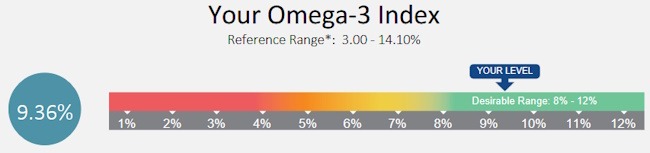
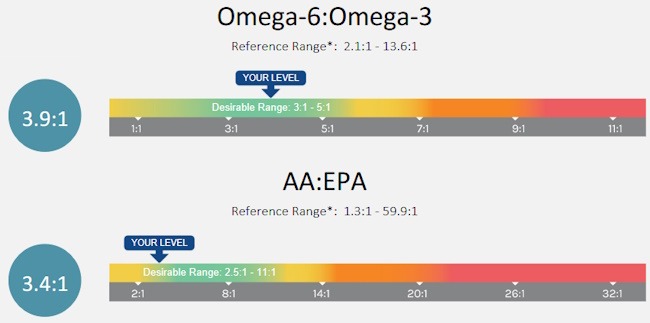

I gave my numbers to ChatGPT and asked it to compare them to the American average.
Related Averages in the U.S.:
- Omega-6:Omega-3 Ratio:
- Typical American Diet: 15:1 to 20:1
- Your Ratio: 3.91:1 (much healthier than average)
- Omega-3 Index:
- U.S. Average: 4–6%
- Your Index: 9.36% (excellent and well above average)
- AA:EPA Ratio:
- U.S. Average: 10:1 to 20:1
- Your Ratio: 3.4:1 (significantly better, indicating a more anti-inflammatory profile)
Paleo Was Wrong
Why the victory lap? Let’s go back to 2013 and read my post Quantifying PUFA, Expert Opinion, and My Conclusion.
Paleo was the rage and despite massive evidence that many traditional cultures ate diets rich in complex carbs, they had embraced all the low-carb lies. They recognized modern diets were too high in Omega-6 fats, so they said to remove seed oils. This was a good first step, but they kept demonizing carbs and preaching MOAR meat - both pork and chicken can be high in Omega-6.
The math never made sense to me.
…the real problem might be what is already stored in our fat tissues. We not only need to minimize the PUFA we eat but get rid of years of eating excess PUFA to optimize metabolism. According to Ray Peat, this process can take four years.
That is four years of eating very low PUFA while the body processes the PUFA stored in fat.
When I ran the numbers, I concluded that to get to optimal low PUFA levels, a higher carb and lower fat diet made the most sense. You could construct a low-carb diet with low PUFA levels, but it would be challenging and quite restrictive. Restrictive diets are fine for a month or two, but a year or more? No thanks.
I’d love to go back to my old Paleo and Weston A Price groups and have them get tested. I bet my mostly SMASH* carb-rich/lower fat diet would destroy their numbers.
* SMASH stands for salmon, mackerel, anchovies, sardines and herring.
But Fish Oil?
I’ve been a fish oil skeptic for 15 years. Assuming you get a fish oil that isn’t rancid, does fish oil fix a problem or mask one? Or maybe it does both?
From my post Fish Oil is so 2010:
A lot of the early logic behind supplementing with fish oil, which is rich in Omega-3, was to improve our Omega-6 to Omega-3 ratio. The higher the ratio, the worse your health outcome. There are two ways to lower that ratio. Either work at reducing Omega-6 or increase Omega-3. There is no profit motive in the first suggestion and plenty in the second. An industry was born and fish oil was their product.
There were a few problems, though. Simply increasing Omega-3 doesn’t address the excess Omega 6, which is likely the actual problem. In other words, this is a numerator problem, not a denominator one.
It’s easy to pop a few fish oil tablets. It takes planning and effort to avoid Omega-6 fats in modern society. I suppose if I ate a crappy diet, I would take fish oil and hope that the brand that I “researched” was legit. But because my diet strictly limits seed oils and processed foods, I don’t need fish oil. Plus, I eat fish.
To deal with heavy metals and environmental toxins in seafood, I donate blood every 70 days. I’ll get my 6-gallon pin in April.
After putting this post together, I discovered that I bought the Omega-3 Index Plus Report and not the Omega-3 Complete Report, which has even more data. Next time.
Comments
exfatloss
February 2 at 2025 at 9:20 PM
Argh, I was gonna ask if you had the fatty acid profile from the Complete :)
If you do get it next time, I recommend you do it fasted in the morning. That way, fats from your meals (even if relatively low-fat) won’t skew the test. You might have noticed that the OQ recommends you don’t eat any fish in the 12 hours before taking the test - best to just cut all food out, and easy enough with an overnight fast..
My main interest would be what your linoleic acid % is. Since you do eat quite a bit of fatty fish, it’s not easy to tell just because you have a low o6:o3 balance. People who’ve eaten severely low PUFA for decades tend to have a low ratio even in total absence of fish intake. But since you do eat quite a bit of o3, we can’t really tell just yet if yours is “just” from the o3 intake or if your stored o6 levels are also low.
Form what you’ve written, though, I’d be surprised if your LA level was high.
For reference, I have an OQ from someone who has strictly avoided PUFAs incl. chicken & pork for 9 years. He also hasn’t had any fish or seafood once in those 9 years. His o6:o3 ratio is 3.8:1, just a tiny bit better than yours. He otherwise eats a relatively high carb, low-fat diet too, if maybe not dramatically low-fat.
Totally agreed with Paleo, or modern low-carb/keto - if o6 is really the issue, chicken & pork should be totally out of the question. Commercial bacon is just as bad as canola oil in that regard.
And yes, it’s easier to drop PUFA if you’re dropping total fat dramatically. My own cream diet is one that is extremely low in PUFA (for a high-fat diet), but like you say it’s extremely restrictive and not for everyone.
I would love to see more people take the OQ Complete and see if “good health” really correlates with low adipose LA, and also which methods of depleting it are fastest. Some people say (low PUFA) keto should be great for lowering adipose LA, others say low-fat (=high-carb) should be better. So far, we don’t really have any data.
MAS
February 2 at 2025 at 9:41 PM
@exfatloss - yeah, not getting the Complete was a first order mistake. The next time I’ll order it for sure.
I have fish a few times a week. Back when I lived in San Diego, I was eating fish every day, often twice a day. I was eating larger non-SMASH fish as well. And I wasn’t regularly donating blood. A fair amount of seed oil, but not “average American” levels.
I just found your post on doing the test fasted. https://www.exfatloss.com/p/do-your-omegaquant-complete-fasted
Jim
February 3 at 2025 at 2:03 AM
Joe Rogan said he was eating sardines daily and his blood work came back with dangerously high arsenic levels. His Dr. had him cut back.
Aaron
February 3 at 2025 at 6:44 AM
Mas,
I have a totally different read on your results. They would make me want to eat gasp more omega 6. I would want to raise my AA a bit by consuming linoleic acid and not AA directly.
I also kind of wonder if your hernia or sports injuries are do to poor tissue repair due to low omega 6. I’m not even going to try to argue with Peaters because they are wrong about so many topics that I can’t even start. Of course a Peat diet is superior to the typical American Diet, but so is every diet in general.
Lower body temperature is typically found in longer lived creatures and centenarians. https://www.technologynetworks.com/biopharma/news/lower-body-temperature-supports-healthy-aging-371826 (against what a typical Peater says)
Omega 6 helping to heal wounds: https://onlinelibrary.wiley.com/doi/full/10.1155/2018/2503950
Peaters also hate Omega 3 and it is vital to the right stages of wound healing: https://pubmed.ncbi.nlm.nih.gov/10632966/
If I was you, I probably wouldn’t start to eat nuts or high omega 6 foods, but I’d definitely be trying to consume more EVOO and lean chicken <--- which would have a little bit of omega 6 as well. I wouldn’t fear the omega 6 of chickpeas or the AA from red meat as well. I would continue to give blood as you do.
That’s my take.
MAS
February 3 at 2025 at 12:33 PM
@Jim - I posted about Rogan a few years ago. I consume far lower levels of sardines these days. I may have 2 cans a week now. At one point it was 1-2 cans a day. I’ve also added chorella a few times a week. Now that my hair is longer, I may get a 2nd test to confirm that my levels have dropped.
https://criticalmas.org/2021/10/joe-rogan-sardines-and-arsenic/
@Aaron - Interesting ideas. My next post will cover the foods I consumed in January. I do eat flaxseed, hempseed, and chia regularly. Chickpeas are also a staple and when I need an oil, I reach for EVOO. I’d love your feedback after the post goes up - probably later today.
I want to explore the body temperature more in its own post.
MAS
February 3 at 2025 at 1:01 PM
@Aaron - Looks like my daily chia seed and hemp seed intake might be pushing down my AA number. That combined with the sardines. I might need to eat more eggs. Thanks for the tip.
Jim
February 3 at 2025 at 6:45 PM
Re: Rogan and Sardines. Ha, your post may be where I heard of it. And one of the commentors on that post says he’s only supplementing with fish oil. So it seems like we might all just be going around in circles. :-)
Julia
February 3 at 2025 at 11:33 PM
Dude! My blood pressure “plummeted” on keto (okay, to be fair, it wasn’t that high before). But I’m back down to “ideal” blood pressure: 108/65 at age 47, female. That’s what is was back in my 20s. I’ve feel like I’m going back in time 20 years! It’s a wonderful feeling.
That was only with 4 months on a true keto diet, 5.5 months on low carb before that (about 9.5 months total on both low carb first, and then keto). 30 pounds lost.
I’m getting the rest of my blood test in a couple days, but it wasn’t a ton a variables. Just a standard lipid panel, fasting glucose, Na, K, CBC. IIRC.
MAS
February 4 at 2025 at 2:52 PM
@Julia - Congrats!
Rickyh
May 8 at 2025 at 2:26 AM
I too have wandered around the diet wars (keto, paleo, Ray Peat, high/low fat/carb) and agree that there is no “truth,” at least not yet, just the best information you can get at the moment. My question is more in the realm of processed foods and their effects on highly Westernized countries as MAS has posted many times: While we can’t return to the non-industrialized tour days of Weston Price, can we still conclude that countries with less chemicals, preservatives and fillers in their foods ranging from France (the French Paradox) to Japan, weigh less and have better health outcomes?
MAS
May 8 at 2025 at 1:47 PM
@Rickyh - Your comment made me think of this book. https://criticalmas.org/2024/10/the-end-of-craving/